Navigating Your Own Career Jungle Gym
- Rebecca Agostino
- Jun 14
- 4 min read


The workforce world (myself included!) love to reference the “career ladder” - the idea that one experience leads to another. Carlos Vazquez, founder of GoSprout, pushed me to reconsider: careers are a jungle gym. They zigzag. You take steps toward and then away from a specific goal. You make tradeoffs between interests, compensation, responsibility, flexibility, and location. You learn what you want by learning what you don't. You find your footing not through a plan but through the accumulation of experience, reflection, and the occasional pivot you didn't see coming.
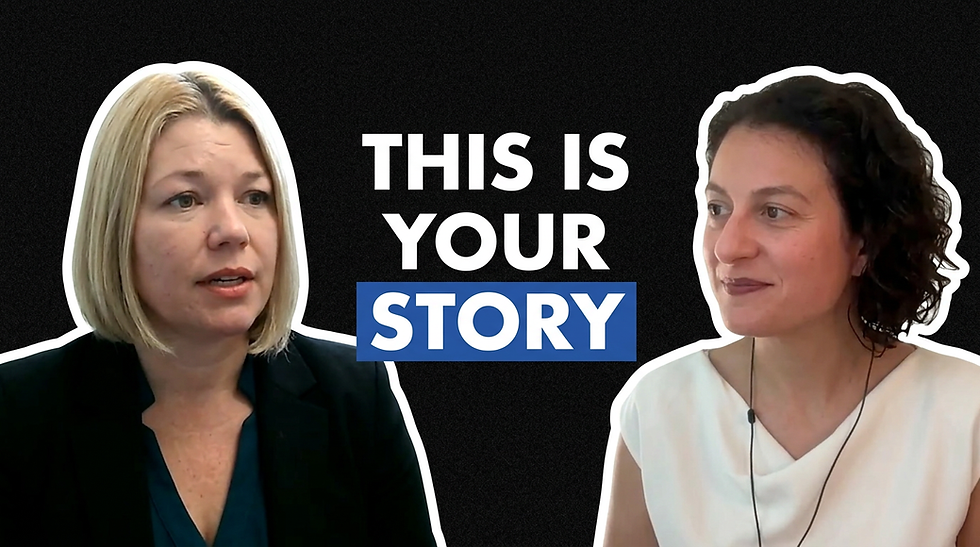
Carlos and I sat down to talk about the career jungle gym, in reflection of Carlos’ experience building a career as an entrepreneur, now parenting two young children who are entering this increasingly complex job market, and now leading GoSprout, a technology platform that helps organizations scale their work-based learning programs.
All young people need a repository of experiences to make good decisions about what to do next. Carlos thinks about this first as a parent. He has a nine-year-old, and he is deliberate about narrating his own world of work to his son — talking about his friends, what they do, what their days look like. Not as career counseling, but as exposure. So that when the moment comes to make a decision, his son is choosing from something rather than from nothing. Recently, his son staked a claim for the first time: he wants to be a baseball player. "It starts with that decision," he told me. "I see all the options, I've experienced these options — now I want to be this." You can only point yourself somewhere once you have a lay of the land and know enough about yourself to make that decision.
Carlos describes two impactful work experiences in his own life: first, as a child, going to work in a grocery store in Puerto Rico with a family member, and then later in college as an “apprentice” for a small business owner. One observation I had from our conversation, as well as my own life and the guests on Wayfinders thus far, was that these early and impactful experiences weren’t “shiny” corporate internships. In fact, Carlos emphasizes that not every student needs a highly curated experience like that to launch a successful career.
The problem is that most students don't have that repository. And we have made it worse by treating the corporate internship as the gold standard of work-based learning — the thing worth waiting for, the thing worth curating, the thing we measure our programs by. In doing so, we have quietly communicated to students that the experiences available to them in their own communities don't quite count.
Instead, young people need experiences and then the opportunity to make meaning from them. Then, they can ladder up to (rewind: zig zag their way to) their next career step. Carlos advises work-based learning leaders today to look to the experiences available for students in their own communities, and helping students make meaning from the opportunities they have available to them.
The privilege of purpose
Carlos shared a reflection on purpose that has really stuck with me. For so many of America’s students, work isn't initially about fulfillment. It's about getting out of the house, paying bills, meeting a basic need. Maslow before actualization, as Carlos put it.
This doesn't mean we abandon the longer arc or pathway work. It means we're honest that the path to thriving at work is built through experience, not through choosing correctly at the beginning, and every job can teach us something. The goal isn't to find the right fit on the first try — it's to accumulate enough experience that the next decision is more informed than the last.
That reframe matters for how we design programs. If we're waiting to place students until we have something prestigious enough to offer, we're waiting too long and asking the wrong question. The right question is: what's accessible right now, and how do we help students learn from it?
Carlos’ first experience
Carlos’s first experience with work was accompanying his uncle to work in a grocery store. He remembers being nervous the first few times, watching his uncle get ready in the mornings and going to the mirror himself: I feel like I'm going to work too. He remembers noticing that charm and humor seemed to matter in building rapport with customers, and how he built confidence over multiple days of work.
What stayed with him, he says, wasn't the job. It was the feeling of belonging — of showing up somewhere that wasn't school or family and earning a place in it. "There's something to be said about getting over that hump of feeling like you belong, regardless of the role."
The questions this conversation brought up for me: how can we help our students make meaning and find belonging in the work that is available to them, while simultaneously plugging into local communities and opportunities to expand their experience set? How can we ensure students are equipped with enough experiences to make excellent decisions for themselves and for their families, and be wary of not undervaluing the types of work that so many of our students do already?
Thank you, Carlos for this reflective and inspiring conversation. To learn more about his work, check out GoSprout here.


Comments